Professional Certificate in Environmental Ethics

-- viewing now
4.5
Based on 2,121 reviews

5,298+

Students enrolled

GBP £ 149

GBP £ 215

Save 44% with our special offer

Start Now

About this course

100% online

Learn from anywhere

Shareable certificate

Add to your LinkedIn profile

2 months to complete

at 2-3 hours a week

Start anytime

No waiting period

Course details

Here are the essential units for a Professional Certificate in Environmental Ethics:

Introduction to Environmental Ethics: An overview of the field, its history, and its importance in contemporary society.

Theoretical Foundations: An examination of the major theories in environmental ethics, including biocentrism, ecocentrism, and anthropocentrism.

Environmental Justice: An exploration of the ethical issues surrounding the distribution of environmental benefits and burdens, with a focus on marginalized communities.

Climate Ethics: A deep dive into the ethical implications of climate change, including the responsibilities of individuals, corporations, and governments.

Biodiversity and Ethics: An examination of the ethical issues surrounding the loss of biodiversity, including the value of species and ecosystems.

Animal Ethics: A consideration of the ethical status of animals, including debates over their use in agriculture, research, and entertainment.

Environmental Policy and Ethics: An analysis of the role of ethics in environmental policy-making, including the challenges of balancing economic and environmental concerns.

Corporate Environmental Responsibility: An exploration of the ethical responsibilities of corporations in relation to the environment, including the concept of sustainability.

Practical Applications: A consideration of how environmental ethics can be applied in real-world contexts, including activism, advocacy, and decision-making.

Career path

In the UK, Environmental Ethics is gaining traction with the increasing focus on sustainability and combating climate change. There is a growing need for professionals who can balance economic growth with environmental protection and social equity. 1. Environmental Consultant (35%): As an Environmental Consultant, you'll advise businesses, governments, and other entities on environmental issues, such as water and air pollution, waste management, and sustainability. 2. Sustainability Consultant (25%): Sustainability Consultants help organizations minimize their environmental footprint, maximize efficiency, and comply with regulations. They also promote sustainable practices and long-term strategies. 3. Green Building Engineer (15%): Green Building Engineers focus on designing and constructing energy-efficient buildings that are eco-friendly and sustainable. They collaborate with architects, builders, and other professionals to create structures that consume less water, energy, and natural resources. 4. Climate Change Analyst (10%): Climate Change Analysts study the causes and consequences of climate change, develop models to predict future trends, and propose solutions to mitigate its impact. They work for government agencies, NGOs, and research institutions. 5. Conservation Scientist (15%): Conservation Scientists manage the overall land quality of forests, parks, rangelands, and other natural resources. They develop and implement plans to regenerate forests and rangelands, protect watersheds, and improve the quality of soil and air. With the growing emphasis on environmental protection and sustainability, job prospects in these roles are expected to remain strong. Professionals in Environmental Ethics can anticipate competitive salary ranges and increasing demand for their skills.

Entry requirements

  • Basic understanding of the subject matter
  • Proficiency in English language
  • Computer and internet access
  • Basic computer skills
  • Dedication to complete the course

No prior formal qualifications required. Course designed for accessibility.

Course status

This course provides practical knowledge and skills for professional development. It is:

  • Not accredited by a recognized body
  • Not regulated by an authorized institution
  • Complementary to formal qualifications

You'll receive a certificate of completion upon successfully finishing the course.

Why people choose us for their career

Loading reviews...

Frequently Asked Questions

What makes this course unique compared to others?

How long does it take to complete the course?

What support will I receive during the course?

Is the certificate recognized internationally?

What career opportunities will this course open up?

When can I start the course?

What is the course format and learning approach?

Course fee

MOST POPULAR
Fast Track GBP £149
Complete in 1 month
Accelerated Learning Path
  • 3-4 hours per week
  • Early certificate delivery
  • Open enrollment - start anytime
Start Now
Standard Mode GBP £99
Complete in 2 months
Flexible Learning Pace
  • 2-3 hours per week
  • Regular certificate delivery
  • Open enrollment - start anytime
Start Now
What's included in both plans:
  • Full course access
  • Digital certificate
  • Course materials
All-Inclusive Pricing • No hidden fees or additional costs

Get course information

We'll send you detailed course information

Pay as a company

Request an invoice for your company to pay for this course.

Pay by Invoice

Earn a career certificate

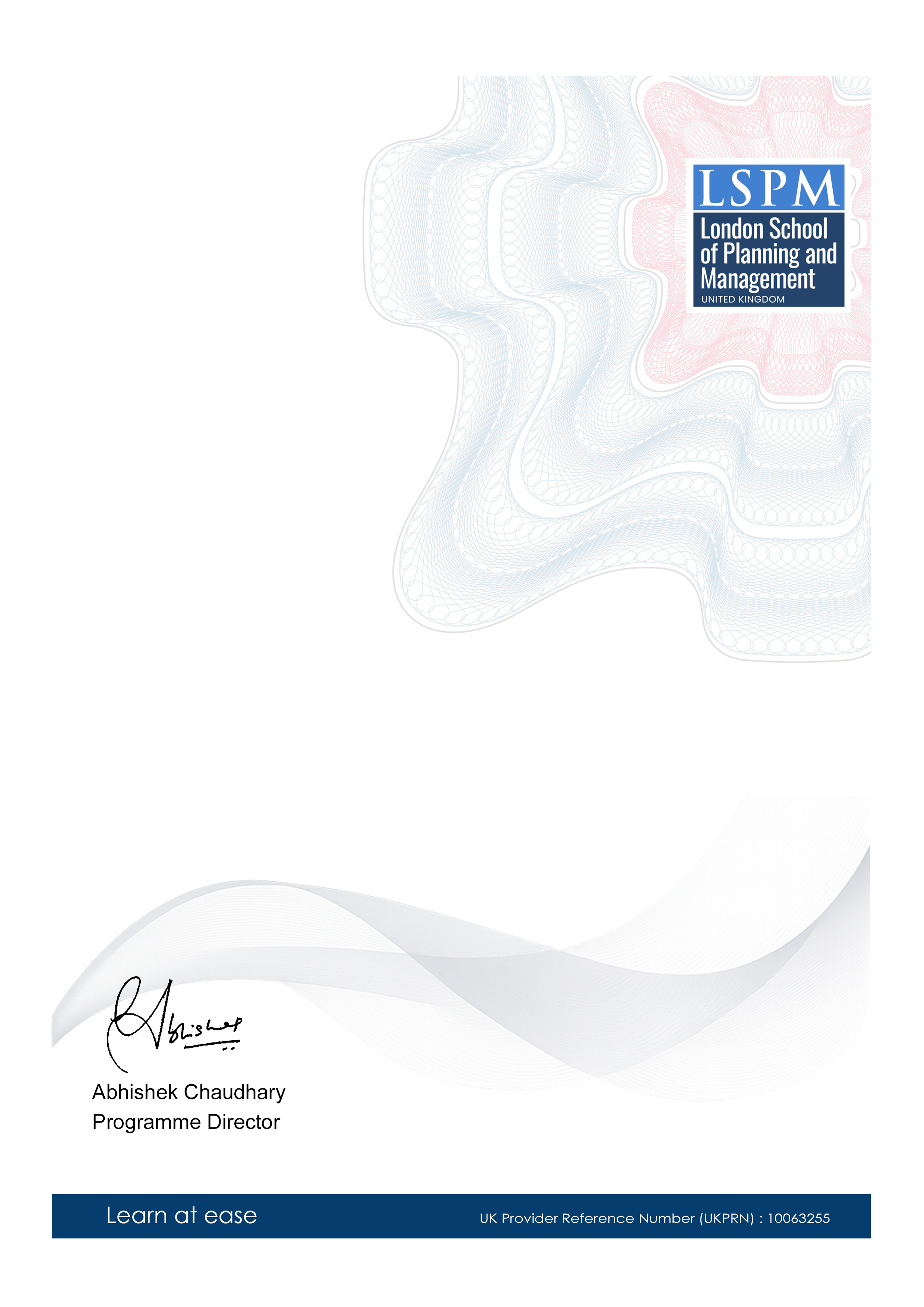
Sample Certificate Background
PROFESSIONAL CERTIFICATE IN ENVIRONMENTAL ETHICS
is awarded to
Learner Name
who has completed a programme at
London School of Planning and Management (LSPM)
Awarded on
05 May 2025
Blockchain Id: s-1-a-2-m-3-p-4-l-5-e
Add this credential to your LinkedIn profile, resume, or CV. Share it on social media and in your performance review.
SSB Logo

4.8
New Enrollment